
What is Digital Marketing?
A beginner-friendly guide to digital marketing: what it is, the main channels, and how to get started.
Read more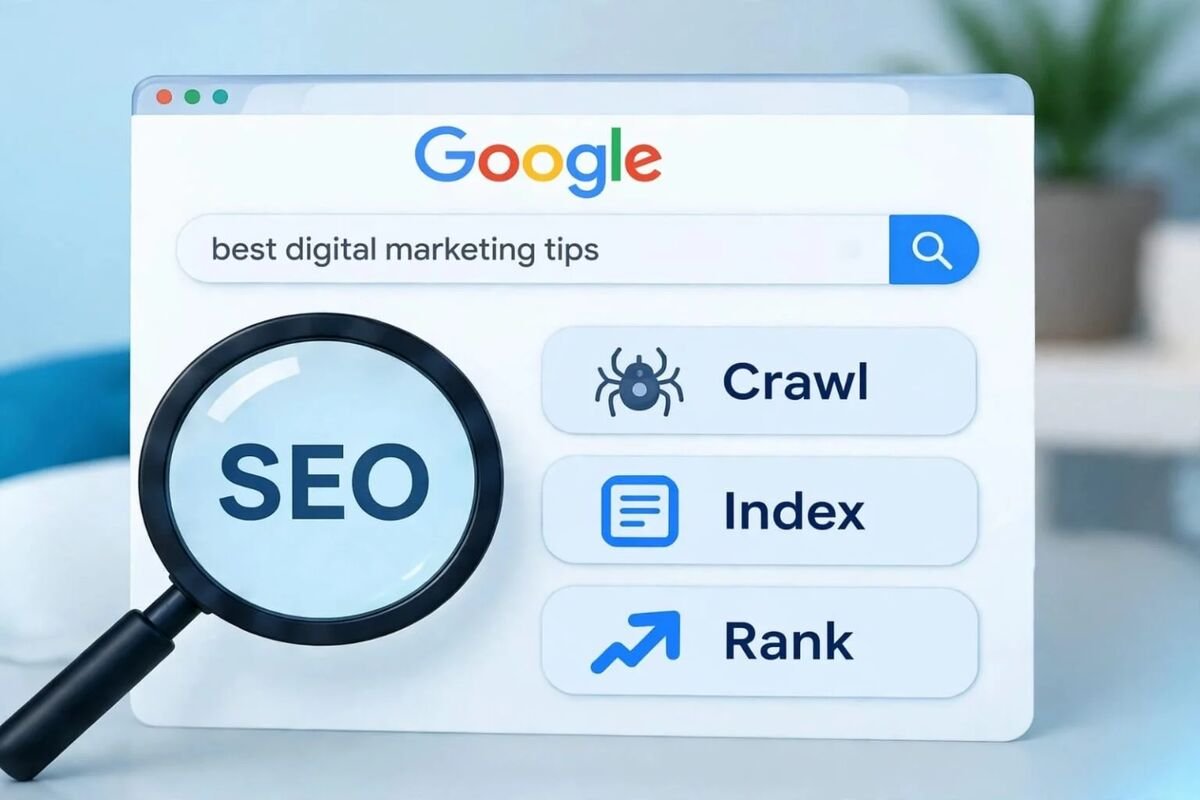
When someone types a question into Google, results appear in less than a second. That speed is possible because search engines have already done the work in advance. They follow three steps: crawl, index and rank.
Search engines use automated programs called crawlers (Google's is called Googlebot) that move from link to link across the web, discovering new and updated pages. If no links point to your page and it is not in your sitemap, crawlers may never find it.
What you can do:
After crawling a page, the search engine tries to understand it: the topic, the keywords, the images, and how it relates to other pages. It then stores the page in its index, a huge library of the web. Pages that are not indexed cannot appear in results at all.
What you can do:
When a person searches, the engine pulls the most relevant pages from its index and orders them. Hundreds of signals affect this order, but the most important are relevance to the search, content quality, page speed, mobile-friendliness and trust signals such as links from other websites.
What you can do:
SEO is not a trick. It is the practice of making your website easy to find, easy to understand and genuinely useful. Get these basics right and the rankings follow.
A beginner-friendly guide to digital marketing: what it is, the main channels, and how to get started.
Read moreStop posting randomly. A step-by-step method for planning a month of posts, reels, carousels and stories.
Read moreContent creation, keyword research, data analysis, ad optimization and personalization: five ways AI makes marketers faster.
Read more